
Schools measure everything about a student.
Except whether they're okay.
2 in 5 high schoolers are quietly struggling, and no score in any school system flags them. The warning signs sit unread in the school's own records. Pebble is the number that finds those kids before the crisis.
Pebble reads the data schools already have and shows counselors who needs them today
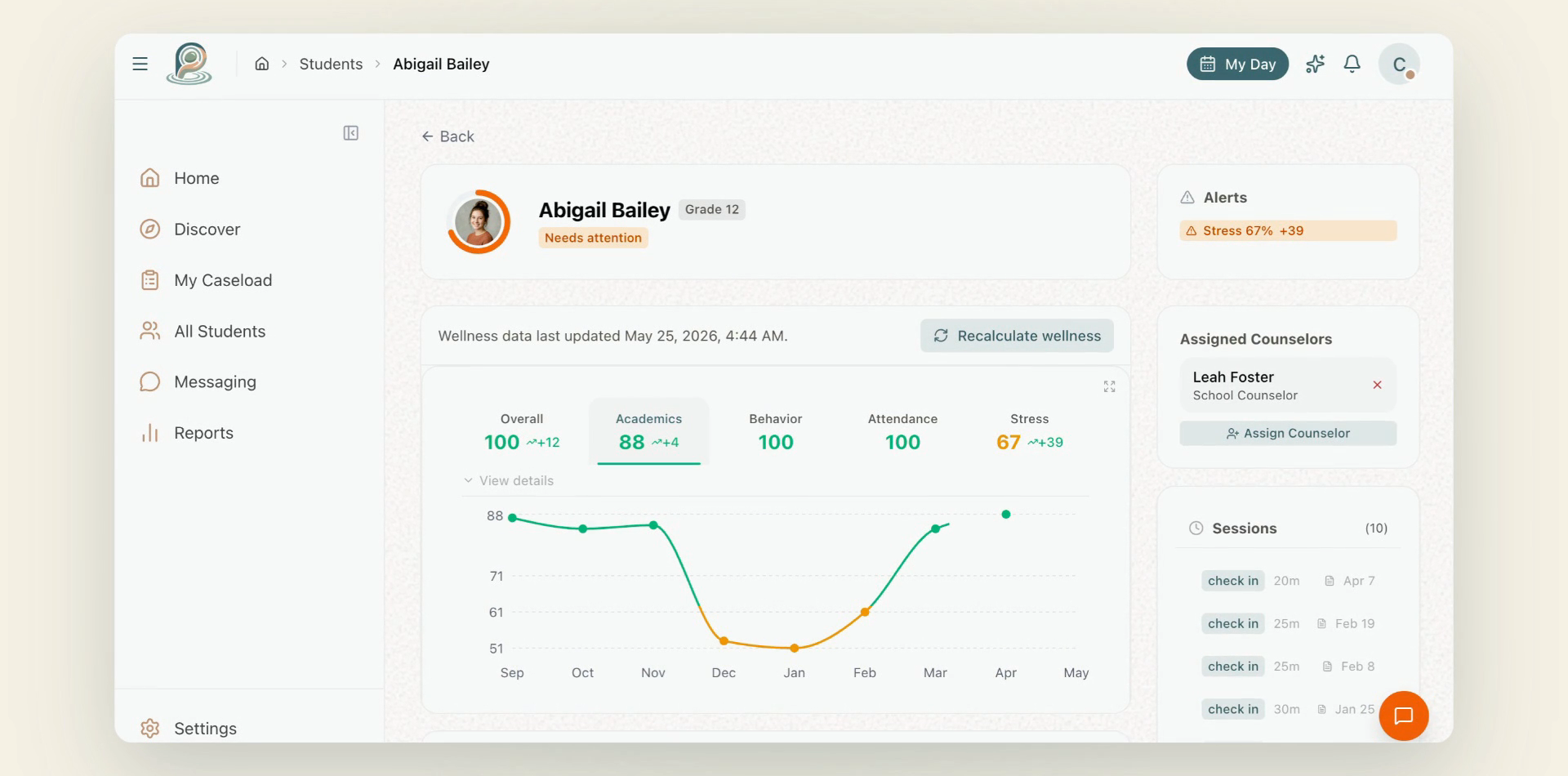 Real product · student profile
Attendance, grades, and behavior — the triangulation a great counselor does by hand, run continuously across the whole caseload.
Drafts the profile, intervention options, and the MTSS meeting agenda. The counselor decides; the software prepares.
No new surveys, no data entry. Plugs into the student-records system the district already runs (Infinite Campus live; Mindex partnership signed). Kids are surveyed out; passive data is honest.
 The people in the building
Built by the people who have done this job for twenty years
Scott Perlman
20+ years in education. Founded and ran an alternative high school for at-risk students inside his district. Trained counselor.
Kyle Cina
20+ years alongside Scott, classroom to instructional technology. Owns SIS integration and district procurement.
Jarret Scheinman
Built and scaled companies in the education space. Runs finance and the raise.
Christopher Grant
Ex-Google Cloud staff architect, 30 years building enterprise-scale platforms — the last decade in cloud and AI for highly regulated industries. Led Pebble's build to date.
A 3,000-student district pilot launches this September
Brewster Central School District, NY
3,000 students, 4 buildings. Director of Pupil Personnel Services championing inside.
One relationship, 25+ districts
A BOCES network (New York's shared-service agencies that buy on behalf of many districts at once) plus the Westchester County mental-health department (commissioner engaged, May 2026).
All inbound or warm referral
Great Neck NY · Hanover SD · NYC DOE (two procurement paths) · founders' home district internal pilot.
Legal stack by Kirkland & Ellis
Privacy Policy, ToS, district DPAs — already in front of district counsel. In K-12, procurement-ready is traction.
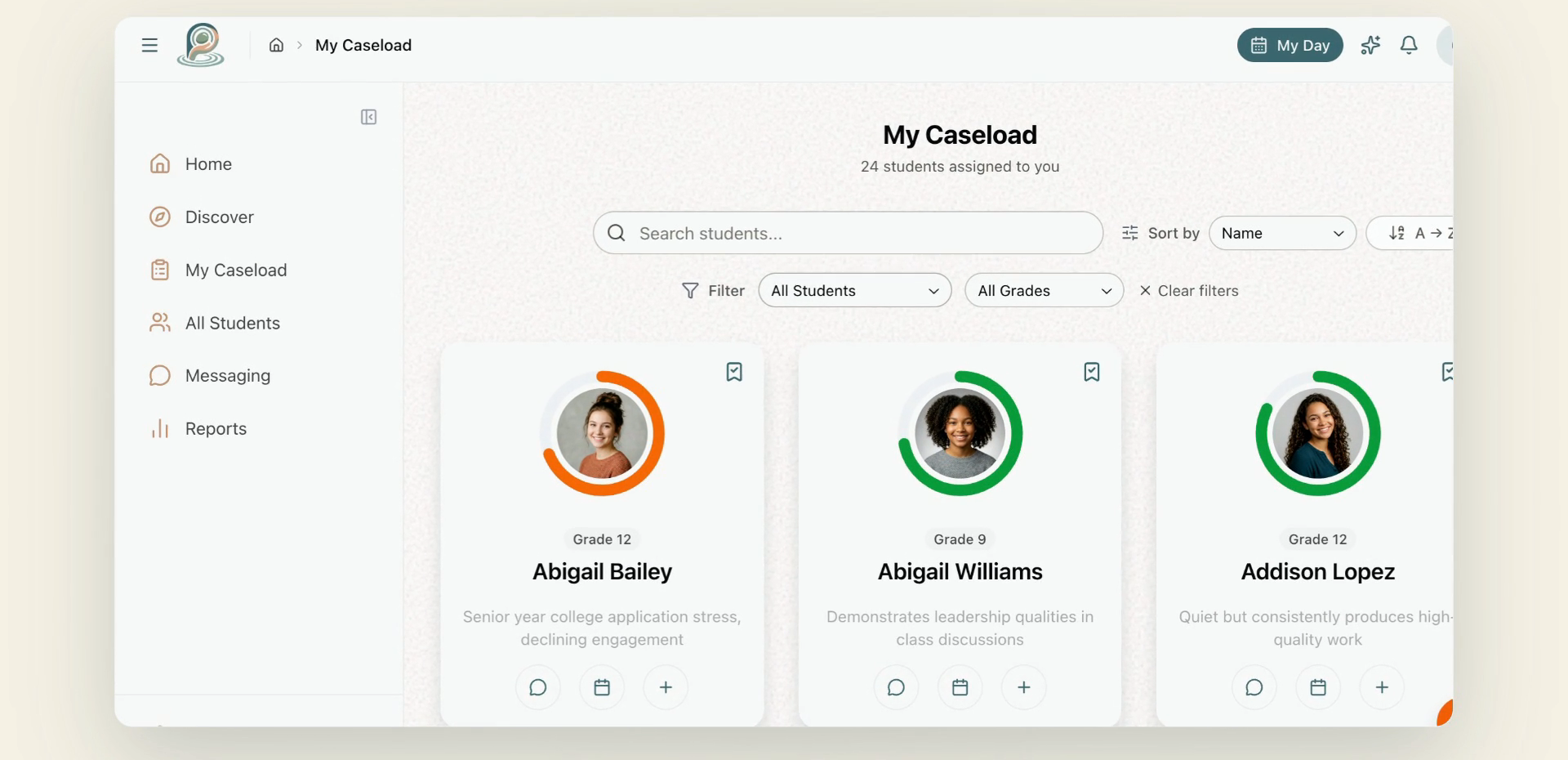 Real product · caseload
Why this is possible now, and why districts can pay for it
New money is earmarked for exactly this
Congress appropriated $1B+ for school mental-health staff, and states are distributing $50B+ in opioid-settlement funds that can fund youth prevention. Districts can buy Pebble without touching classroom budgets.
Schools adopted a process that needs our product
~74% of schools now run "MTSS": the standard routine where staff meet over data to spot and support struggling students. The process is universal; the software for it doesn't exist. That's the hole Pebble fills.
The absenteeism crisis is on every superintendent's desk
~1 in 4 students is chronically absent, still far above pre-pandemic levels. Districts are publicly measured on it, and attendance is Pebble's strongest early-warning signal.
Student records finally opened up
The systems that hold grades and attendance now expose modern integration standards, making a product like Pebble buildable by a small team for the first time.

Districts pay per student. It's 0.2% of what they already spend.
District license
Per enrolled student, billed annually — a 3,000-student district.
Paid pilot
Single school, where procurement wants a small first step (the NYC DOE path).
County / BOCES channel
Many districts in one motion. The median public-school counselor costs $77K (BLS) — Pebble prices far below one hire and multiplies the ones they have.
Pre-revenue today, and we say so. What we have is pricing districts told us "nobody blinks at."
Everyone else surveys kids or watches screens. Nobody scores the records the school already trusts.
- The status quo — the real competitor: spreadsheets, gut feel, post-crisis response. No early warning at all.
- Panorama Education ($60M raised · 13M students): student questionnaires + analytics. Everything depends on kids self-reporting honestly.
- GoGuardian Beacon · Securly · Linewize: device monitoring, self-harm keywords. Watches screens; misses the kid quietly failing and absent.
- Closegap (grant-funded nonprofit): daily self-report check-ins. Free tier validates the category.
- Passive data: the only platform scoring attendance, grades, and behavior — records the school already trusts. Survey vendors can't pivot here without invalidating their own product.
- Practitioner-tuned: the concern index encodes 20 years of pattern recognition from inside the building.
- Compliance-first: architected for NY Ed Law 2-d, the strictest in the country. Everywhere else gets easier.
- Relationships, not a sales team: Brewster, BOCES, and Westchester all came inbound or by referral.

Every edtech has to comply. Almost none are ready on day one. We are.
Districts ask about privacy before they ask about price, and an unprepared vendor loses months in legal review. We did this work up front, so pilots start instead of stalling.